
Clean air and safe outdoor space should be a right for every child, Cleveland students argue
Stories from the indiegraf network

The Land is a local news startup that reports on Cleveland’s neighborhoods. Through in-depth solutions journalism, we help to foster accountability, inform the community, and inspire people to take action.

With 161 city parks and several Metropark reservations spread across Cleveland, the city may seem rich in nature spaces. But for many children, safe and meaningful access to the outdoors is still out of reach. Now, some of Cleveland’s youngest voices are speaking up, calling for every child’s right to play, explore, and breathe fresh air to be recognized and protected.
This past Earth Day, AP Environmental Science students from Cleveland Metropolitan School District’s (CMSD) John Marshall School of Civic & Business Leadership presented to Cleveland City Council’s Committee on Workforce, Education, Training, and Youth Development, 12 fundamental rights that every child in Cleveland deserves when it comes to outdoor experiences and nature access.
The 12 rights make up the Children’s Outdoor Bill of Rights (COBOR), a collaborative effort between the students, their teacher, and the Western Reserve Land Conservancy.
“A children’s outdoor bill of rights is just a list of activities that a particular city or region is going to make an effort to make sure all the children that live in that area have the ability to have those experiences,” explained Renee Boronka, director of conservation education and outreach at the Western Reserve Land Conservancy.
Council approved the resolution adopting COBOR on April 28, establishing a commitment to ensuring all children in Cleveland have safe and equitable opportunities to engage with nature.
Citywide Commitment to Outdoor Access
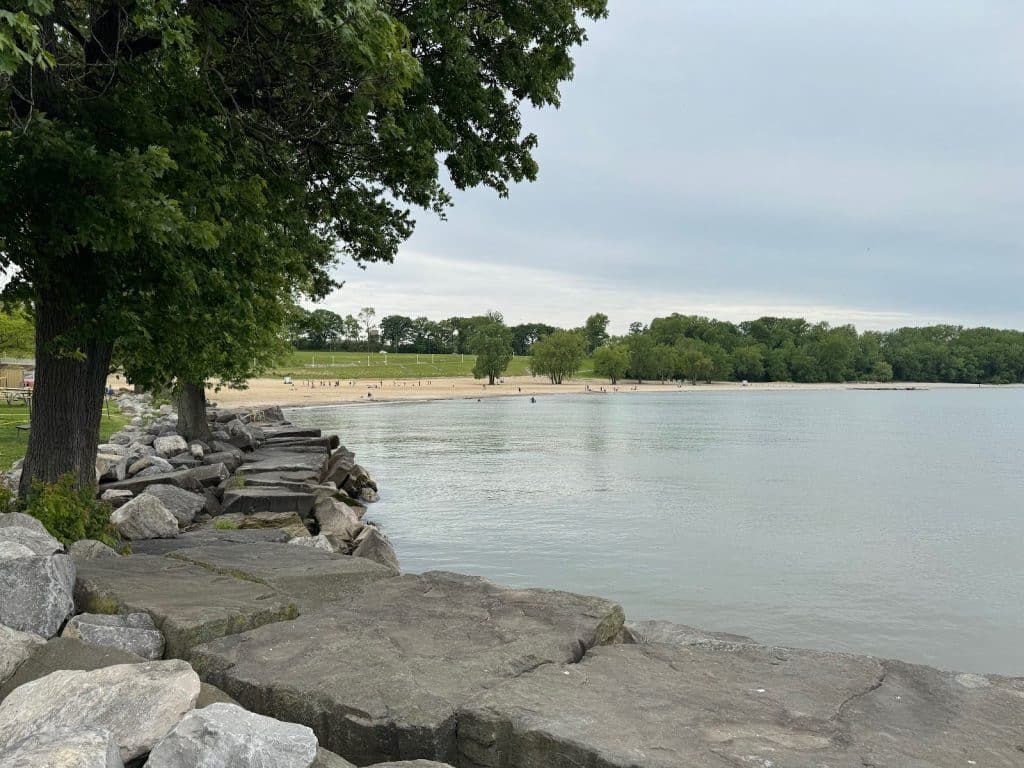
The rights outlined in the COBOR affirm that every child in Cleveland should have access to safe, meaningful outdoor experiences. These include the right to breathe fresh and clean air, to play safely on beaches, in Lake Erie, in clean parks, greenspaces, rivers, and streams.
The bill goes on to outline rights regarding being able to safely hike, bike and explore nature, participate in winter activities, walk on tree-lined streets, and have the opportunity to dig in the soil, plant seeds and watch those seeds grow. The bill also lists rights related to community connection in the outdoors, including safe bike trails that connect the Cleveland community, sharing meals outdoors, camping, learning in nature and building the confidence to become stewards of nature.
Sponsored by councilmembers Brian Kazy, Stephanie Howse-Jones, Jasmin Santana, Deborah Gray, Joseph Jones, Charles Slife, Jenny Spencer and Richard Starr, the resolution goes beyond listing outdoor rights for children. COBOR also underscores the benefits of access to nature for children, including improved health, happiness, stronger academic performance and a sense of environmental responsibility. It also explicitly states the City of Cleveland’s commitment to providing equitable access to parks, greenspaces and outdoor opportunities for all children.
The included rights were not chosen at random, but were informed by a 2024 survey conducted by the Western Reserve Land Conservancy. The survey asked both children and adults in Cleveland what they enjoy most when spending time outdoors. John Marshall students then used those insights to shape the specific rights included in COBOR, ensuring the resolution reflected genuine community interests and needs.
“It was a pleasure, as Chair of the Workforce, Education, Training, and Youth Development Committee, to witness firsthand the remarkable research, planning, and drafting undertaken by our young people for the Children’s Outdoor Bill of Rights. Their presentation to City Council underscored the vital importance of hearing directly from our youth,” said Councilwoman Santana in an emailed statement.
“City Council is dedicated to working alongside our community to foster a more sustainable Cleveland for everyone. These young voices are our future, and I am deeply impressed by their insightful recommendations and suggestions for achieving a more sustainable Cleveland,” she added.
The effort to prioritize children’s access to nature in Cleveland didn’t start with the passage of the resolution. It builds on years of groundwork, collaboration, and support from national partners, local advocates and educators.
Partners in Progress
“Three years ago, I received a grant from the National League of Cities and the Children and Nature Network, which is a large national organization that does tons of research on the benefits of nature to children,” Boronka said. “They were offering these grants to people working within municipalities to explore creating more opportunities for kids within their cities… and I worked with a collaboration of people within Northeast Ohio that are trying to connect kids to nature.”
The National League of Cities, an organization made up of city, town and village leaders who work to improve the quality of life for their constituents through education, advocacy, and support, in partnership with Children and Nature Network, a nonprofit that focuses on increasing equitable access to nature for children, launched an initiative called Cities Connecting Children to Nature (CCCN). CCCN is a nationwide effort that supports cities in creating more equitable opportunities for children to engage with nature.
“Footpath Foundation is a really strong partner of mine, they take children that live within the CMHA housing in the city of Cleveland to camp every summer. I’ve also worked closely with the Nature Center at Shaker Lakes, Organic Connects, See You at the Top,” Boronka said. “I got all those folks in the room and I learned from having the grant… that it’s not about creating a new organization to do this stuff. It’s about helping the ones that are already here do it a little bit better and help them fundraise.”
An expansion of CCCN called Nature Everywhere is a joint initiative again involving the National League of Cities, the Children & Nature Network, and additionally KABOOM, a nonprofit focused on playspace equity. Nature Everywhere aims to increase equitable access to nature in 100 U.S. communities by 2025.
“About a year and a half ago, my grant ran out. So Mary [Kennedy-] Brown, who is the teacher at CMSD, applied for a continuation of that grant, and it was called Nature Everywhere,” explained Boronka. “When I met Mary [Kennedy-] Brown, she also had this group of AP Environmental Science students, they were juniors and seniors…she and I were like, let’s have these kids write [the grant]!”
Youth Voices Leading the Way
The John Marshall School of Civic & Business Leadership emphasizes social impact as a school touchstone, inspiring a new generation of leaders to promote equitable and sustainable development in Cleveland. That practice made the school a fitting partner for COBOR.
“They can learn advocacy, and at the same time, we’re talking to them about sustainability and nature and outdoors and why it’s important,” Boronka said.
However, the experience went beyond creating the bill. For students, the partnership offered a hands-on understanding of what equity, and lack thereof, looks like when it comes to green space and nature access.
“One of the exercises we did with the students was everyone gets a bag of Lego blocks, and there’s trees and plants and different Lego pieces in each bag,” Boronka explained.
Boronka and Kennedy-Brown had students separate into groups and use the materials in their bags, to attempt to build a model park.
“What they don’t realize is that you maybe in one bag only put three trees, and then in another bag, you put 10 trees, and one bag doesn’t have any trees,” Boronka said.
“As they’re building their park, they start looking around the room, and they’re like, ‘Wait a minute, I don’t have as many trees as, you know, this group has,’” Boronka continued. “It clicked for them. They understood how things are not equitable in Cleveland, and how some kids really don’t have quality experiences outside.”
This hands-on lesson reflects broader national trends. A report from the Center for American Progress highlights that children, especially those from low-income families and families of color, are among the most nature-deprived groups in the United States.
The report goes on to highlight that low-income communities are more likely to experience nature deprivation, with 70 percent of low-income people living in a nature-deprived area by census tract, and that figure rising to 76 percent for low-income communities of color.
While the report doesn’t focus specifically on the sources of these disparities, it acknowledges the role of environmental racism, citing historical practices like redlining, segregation, and the displacement of Native American populations, as a critical context for understanding inequities in the distribution of nature areas.
Turning Rights Into Action
Cleveland is not alone in making a commitment to ensuring children have safe and meaningful access to the outdoors. Other cities in Ohio have taken similar steps. In 2024, Cincinnati City Council passed a resolution focused on guaranteeing every child in the city accessible pathways to experience and interact with nature.
With Cleveland’s recent adoption of its own COBOR, advocates see this as a meaningful step forward, but not the final one.
“[COBOR] is one that people can actually act upon and I really do think that each right makes you think about all the different ways that kids can have access to nature,” said Boronka.
“They’re just things that are children’s rights as they’re growing up. Children don’t have the ability to make these things happen for themselves, so we have to look out for them. When it passes through city council, it becomes a commitment. It’s a commitment by the city that they’re going to make efforts to make these rights possible for kids in the city of Cleveland.”
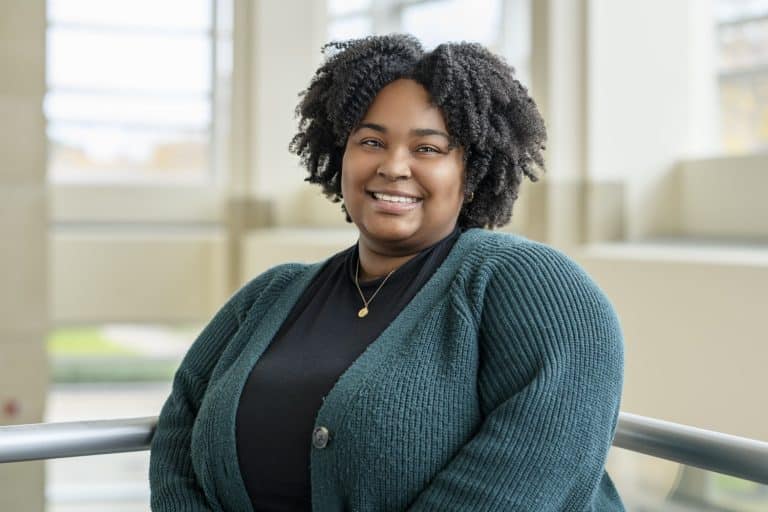
Taylor Wilson
Author, The Land
Taylor Wilson is a communications and outreach professional with roots in Cleveland’s nonprofit sector. With a decade of experience living, working, and volunteering in the city, she is passionate about crafting compelling narratives that resonate with the community and connecting individuals to resources that empower them.
Related Articles

How Austin’s Sister Cities Keep Latin America Close to Home
Through music, food, and cultural exchange, Austin’s sister city connections bring Lima, Peru and Saltillo, Mexico a little closer to home.

The price of policy
Missoula’s public schools are grappling with the fine print of new education laws — including a fingerprint requirement for volunteers that comes with high costs but no extra funding from the Legislature to cover them.

Ohio Democrats put forth bills to protect marriage equality and LGBTQ+ youth, celebrate all loving families
The bills also take a stand against the rash of anti-LGBTQ+ equality legislation in the state.

Comments (0)
There are no comments on this article.